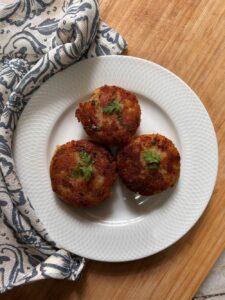

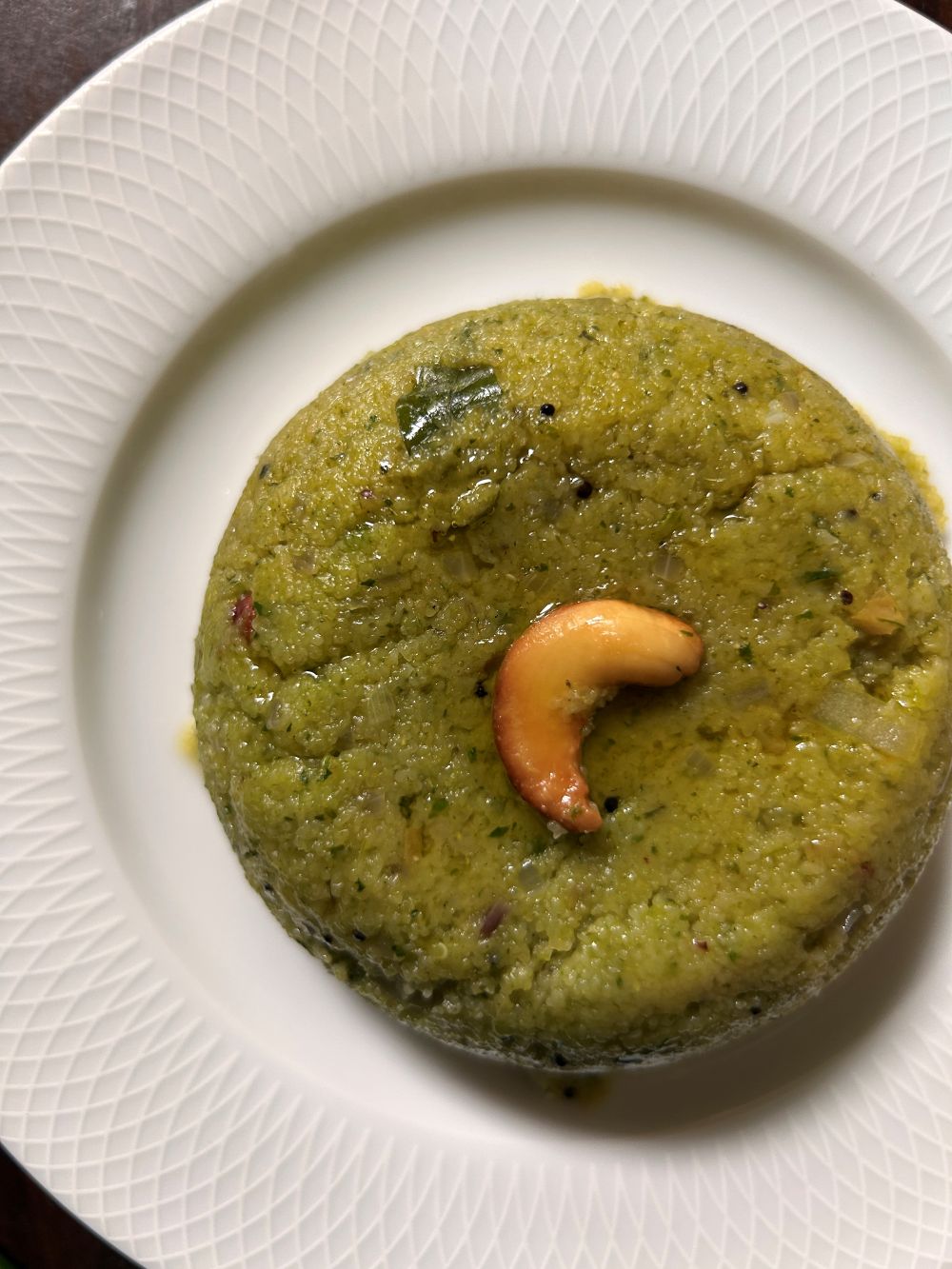
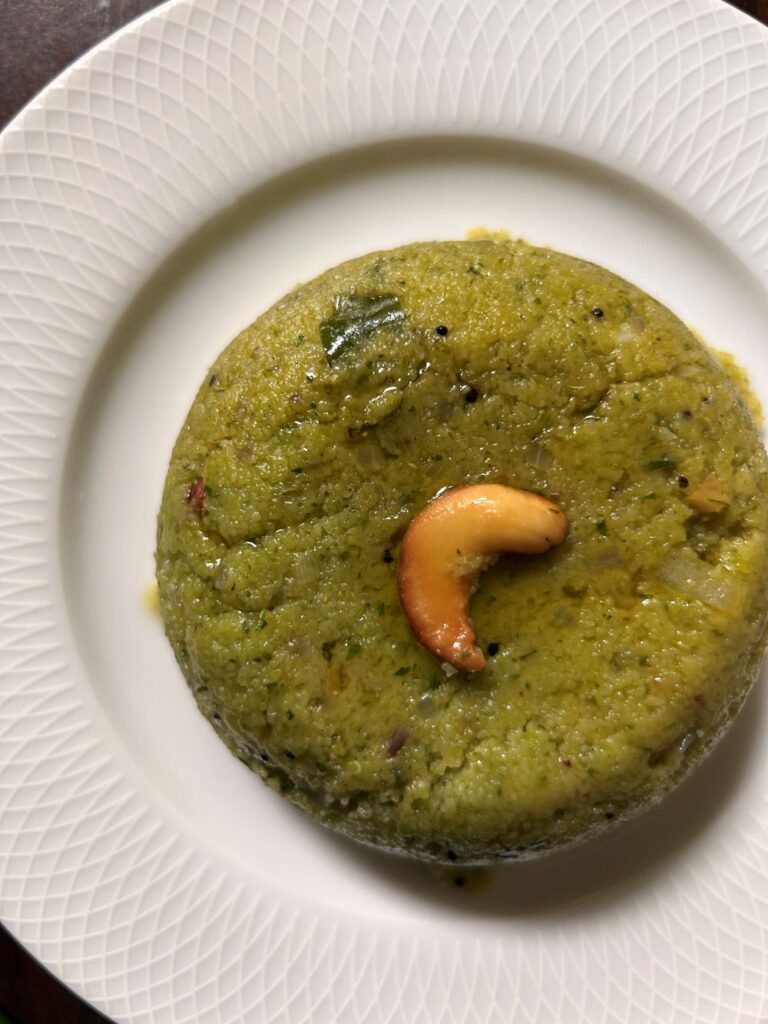
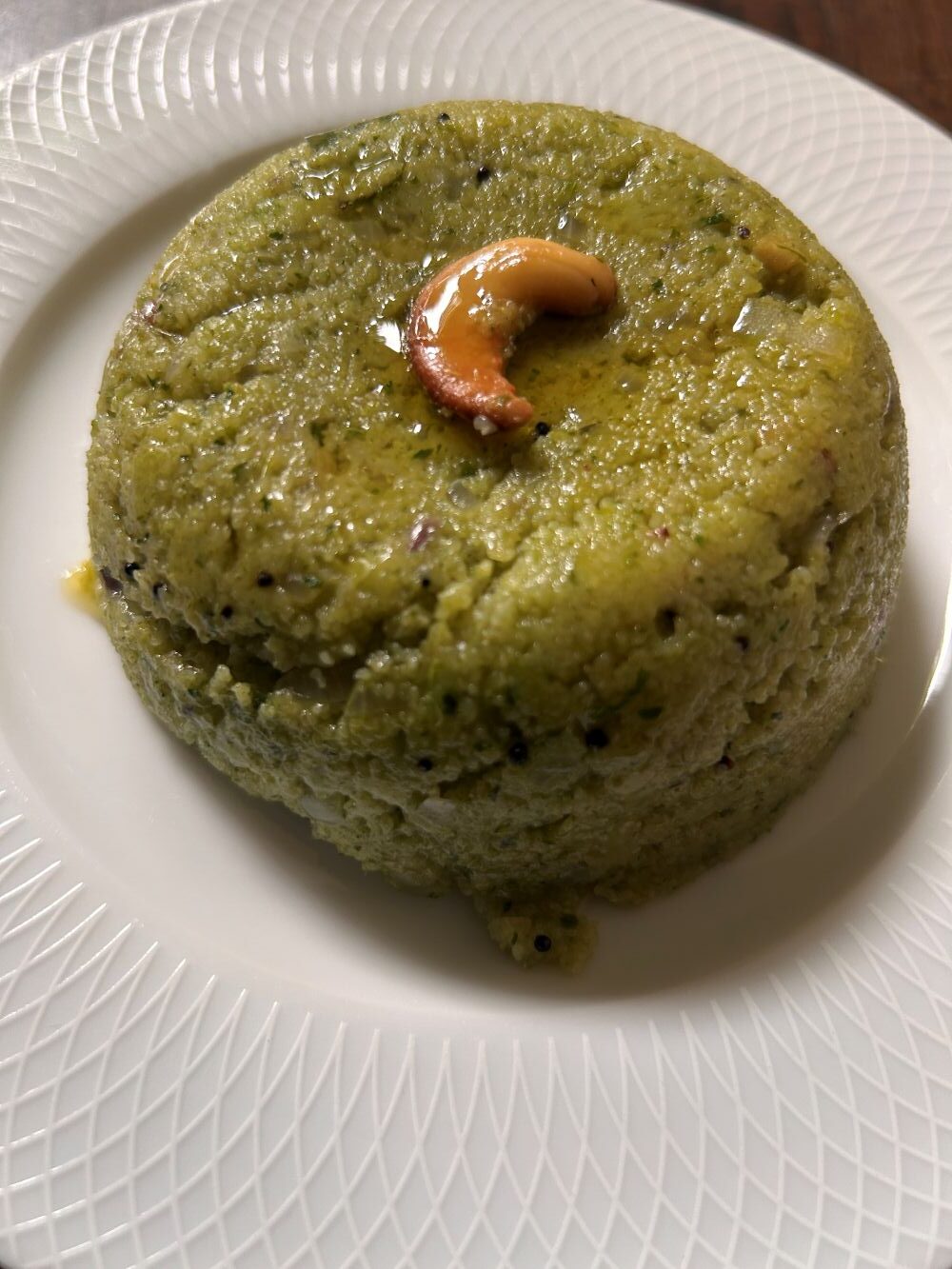
Coriander Upma is a semolina (Rava) porridge with South Indian spices, coriander leaves, chillies and vegetables – perfect for breakfast, snack, or even a light dinner.
Table of Contents
I love Upma- I can eat it any time of the day. But I am sure there are a lot of you will disagree with this statement. I know a lot of them who hate it from the core of the being – yes, that’s a bit of an exaggeration, but that is the feeling you get from them. Perhaps they hated it because they probably ate a poorly made Upma the first time. The not well made texture could either have been how lumpy it was, how dry it was or how liquidy it was. Each of us prefers one texture over another, so this is probably the major determinant in the love for upma too.
Corainder Upma
Coriander Upma is a South Indian dish prepared with rava (semolina), coriander, and green chillies, among other ingredients.
This upma has a fresh flavour rendered from the coriander-chilli paste used as the base for flavouring it.
I’ve made this upma for breakfast and dinner and sometimes packed it in the lunch box as well.
Coriander Upma is just a variation of the normal rava upma with the addition of a coriander-chilli paste.

A small history of Rava Upma
Rava is a byproduct of the milling process of wheat. During the Second World War, the South Indian population had a shortage of rice in their homes as rice was being routed to the war effort. To encourage South Indians, who are mainly rice eaters, to eat wheat was quite an ask. Newspapers and other printed media encouraged home cooks to use wheat in the form of a finely ground but coarse texture that somewhat resembled rice. Home cooks were taught how to make it with flavors that were recognizable in the South.
Upma was always part of South-Indian menu but coarsely ground rice was used – Arisi Upma or Thari Akki upppittu. This new ingredient – Rava or semolina was used as an alternative in making the same dish.
Ingredients to make Coriander Upma
Rava – If you buy your groceries from a local corner shop, you get two varieties of it. The first is the local Rava or Bombay Rava or sooji which has a finer texture and white in color that you can use for Upma. The other is Bansi Rava or chiroti rava that have a brown tinge to it and slightly bigger grain than the local rava. Both ravas can be used to make Upma but the texture most of us are used to at home is the local rava that has slightly smaller grain.
Water – I mention water because there are a couple of replacements you can use to enhance the flavor of upma.
- Vegetable Stock
- Tomato Puree
Oil/ Ghee
I use gingelly oil for almost all cooking at home. In place of gingelly oil, you could use sunflower oil, groundnut oil, or even ghee for a rich flavor.
Coriander and Green Chillies – These two ingredients are the main flavouring agents in this dish. They add a fresh and zesty flavour to an otherwise bland dish.
Variations to Upma
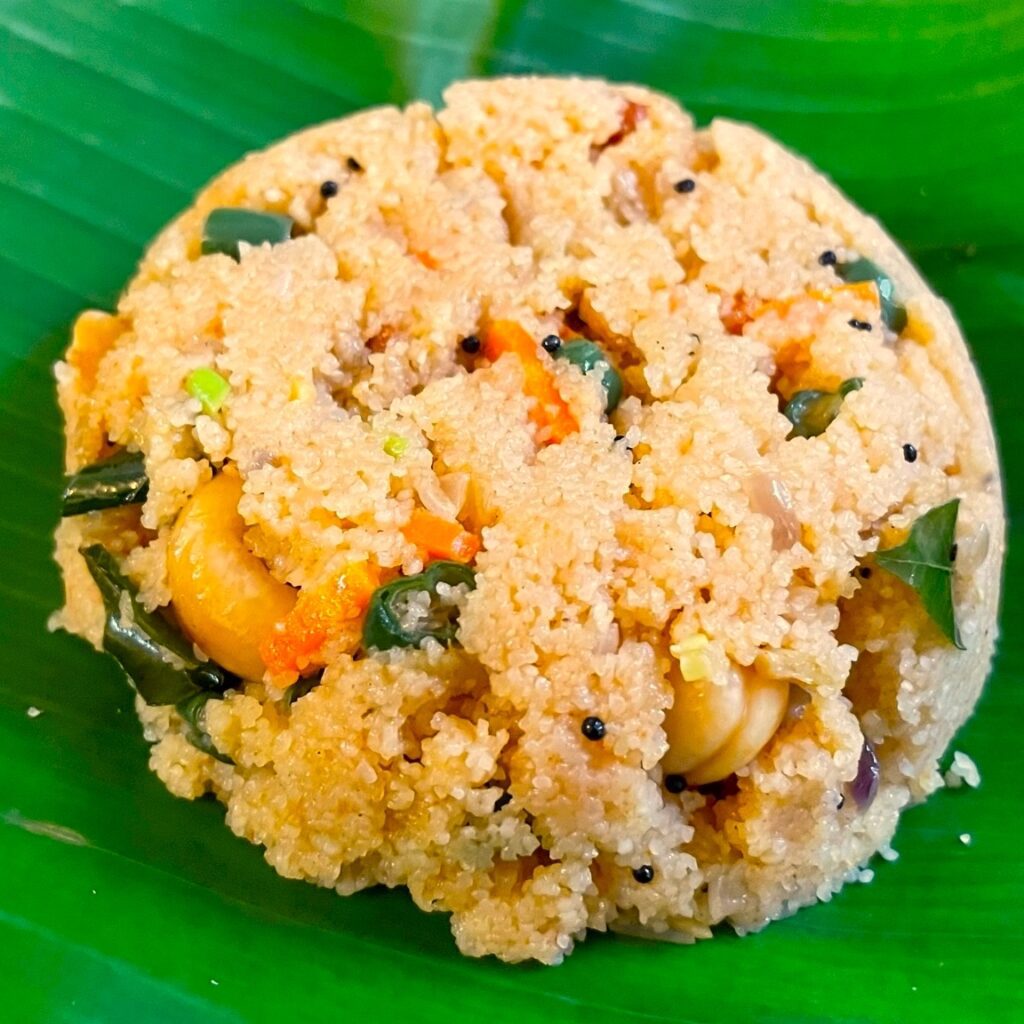
Khara baath literally translates to “Spicy baath”. This is a variation of Upma quite popular at home.
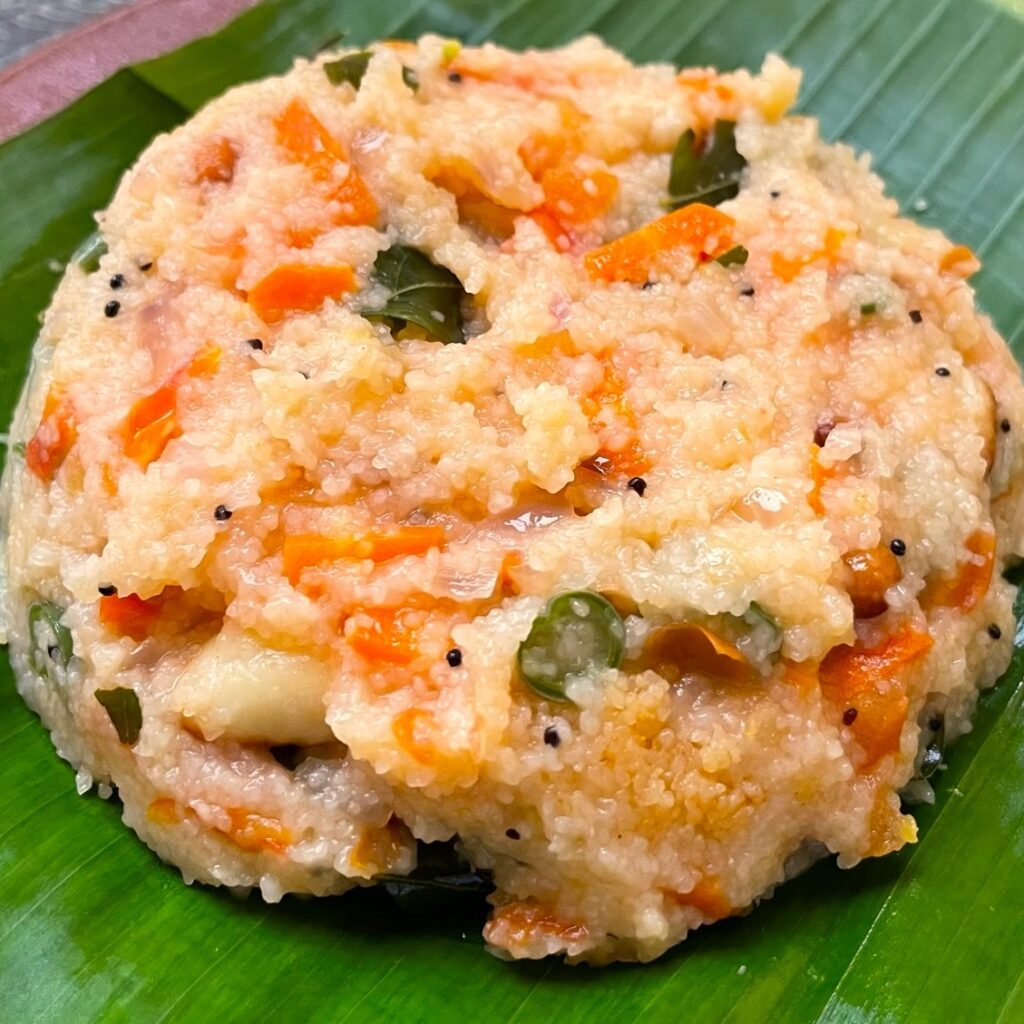
Tomato Upma
This is the version made at most homes with a couple of finely chopped tomatoes. Add them after the onions and saute them until soft and mushy. Continue as per the recipe.
Note to beginners
For those who are making it for the first time, a simple upma recipe should consist of the least number of ingredients – Rava, hot water, oil, mustard seeds, onions, green chillies, curry leaves, and salt. It is a no-frills version with less ingredients but will still taste great.
Just gather all your ingredients and follow the steps as given in the recipe box below.
How to make Coriander Upma?
Coriander upma is just another variety of the normal upma we make at home. The only step you need to do in preparation is to make a paste of coriander leaves and green chillies. These two ingredients give the upma the vibrant green colour.
Please see the recipe box below for the full recipe.
Shelf Life and Storage
Coriander Upma can stay on the shelf/ table for half a day. In the wintertime, it will be fine if kept outside. In the summer, you might want to put it in the fridge.
You can make and store it in the fridge for up to 2 days. After that, it might not taste that great but it wouldn’t have gone bad per se.
Recipe
Coriander Upma
Ingredients
- 1 cup Rava semolina
- Coriander Leaves handful
- 2 Green Chilies small ones
- 3 tbsp Gingelly Oil or Ghee
- 1 tsp Mustard Seeds
- 1 tsp Chana Dal
- 1/4 cup Cashews (optional)
- 1 sprig Curry Leaves
- 1 tsp Ginger finely chopped
- 1 Onion finely chopped
- 2½ cups Hot Water
- 1 tbsp Lemon Juice
- 1 tbsp Ghee (optional)
- Salt as per taste
Instructions
Prep Work
- The first step is to make the coriander and chilli paste. Take the smallest jar of the mixer, add 2 small green chillies along with a whole handful of coriander leaves along with the thin stems. Grind it to a smooth-ish paste.
- Cut all the vegetables, curry leaves and cashew nuts and keep them handy next to you.
- I prefer to use hot water. So I always have a liter of water ready next to me while making upma.
How to make Upma
- Place a pan on medium flame, add the cooking oil. Once the oil is warm, add the mustard seeds.
- Once the seeds start sputtering, add chana dal and cashews. (I add a lot of cashews cos my kid loves it – this is completely optional)
- Once the dal and cashew nuts are toasted in the oil, add curry leaves, ginger and green chilies. Reduce the flame to low and stir them.
- Next, add the finely chopped onion in the pan, and saute it until the onions are translucent (cooked).
- Add the diced vegetables to the pan now; they will cook fast – maybe just 2 minutes. (This is an optional step – you can skip this if you are not planning to add any vegetable)
- Once the vegetables are cooked, add the rava and give it all a good mix. Roast the rava along with the oil and the onions for at least 4-5 minutes so that the oil absorbs well into the rava.
- Now, add the coriander-chilli paste and mix well with the rava.
- Add hot water slowly from the sides of the pan, while stirring to ensure that rava does not turn into clumps. (It will mostly not happen, because of having sautéed the rava in oil)
- You will see that Upma has started to come together, all that needs to happen is for the rava to cook. The cooking will take place rather quickly so, do make sure to keep stirring until all the water gets used up.
- If you feel that the rava has not cooked but all the water is used up, you can add some more hot water. Rava usually tends to absorb any amount of water.
- Once you see the rava cooked, switch off the flame. Close the lid of the pan and let it steam-cook for another 10 minutes.
- After ten minutes, squeeze in lemon juice and give it all a good mix.
- Serve the delicious plate of Coriander Upma with Coconut chutney or you can eat it as is. You could also add a teaspoon of ghee on top – now that is heaven!
If you are looking for more Tiffin Recipes, please click here to find the recipe you are looking for.
Please do follow me on Instagram and Facebook and do subscribe to my channel on YouTube. Thank you so much!